
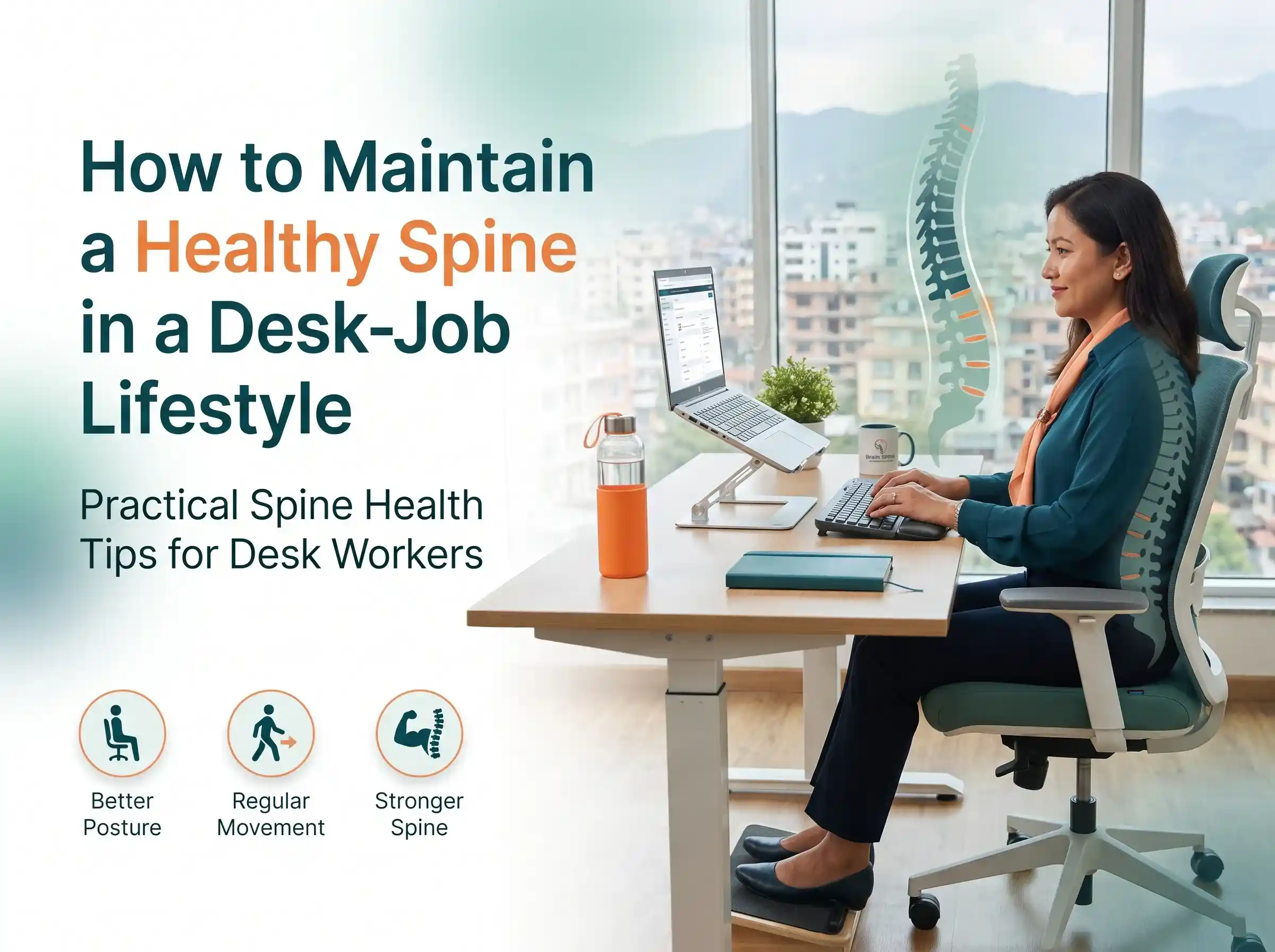
How to Maintain a Healthy Spine in a Desk-Job Lifestyle
if you spend most of your day in a chair or desk job, you are not alone. Today, over 80% of global jobs are mostly desk-bound, with office workers remaining seated for roughly 81.8% of their shift. While this change has boosted productivity, it has also triggered a quiet epidemic of back and neck issues.
At Brain Spine & Wellness Clinic in Kathmandu, Nepal, Dr. Suresh Sapkota — a Senior Consultant Neurosurgeon and Endoscopic Spine Surgeon — sees firsthand how desk-job lifestyles contribute to chronic back and neck pain. With an MBBS from Kathmandu Medical College and an MS in Neurosurgery from King Edward Medical University, Dr. Sapkota specializes in helping patients protect their spines before problems become serious.
This guide combines clinical insights with the latest evidence to help you maintain a healthy spine — even if your job keeps you seated.
Why Spine Health Matters ?
Your spine is the structural center of your body. It supports your weight, protects your spinal cord, and allows you to move, bend, and twist. When spine health deteriorates, the effects extend far beyond back pain.
Globally, 619 million people were living with low back pain in 2020, with projections reaching 843 million by 2050. Low back pain is now the single largest cause of disability on the planet — ahead of depression and hearing loss.
Roughly 22% of that disability burden is tied to occupational ergonomic factors — how we sit, stand, and move at work. For desk workers, this means that small daily habits compound into significant long-term problems.
Dr. Sapkota emphasizes that spine health is not just about avoiding pain. A healthy spine supports nerve function, mobility, and overall quality of life. Ignoring early warning signs can lead to chronic conditions that require surgical intervention.
5 Common Causes of Spine Problems in Desk Jobs
Understanding what damages your spine is the first step toward protecting it. Here are the five most common culprits in desk-based work environments:
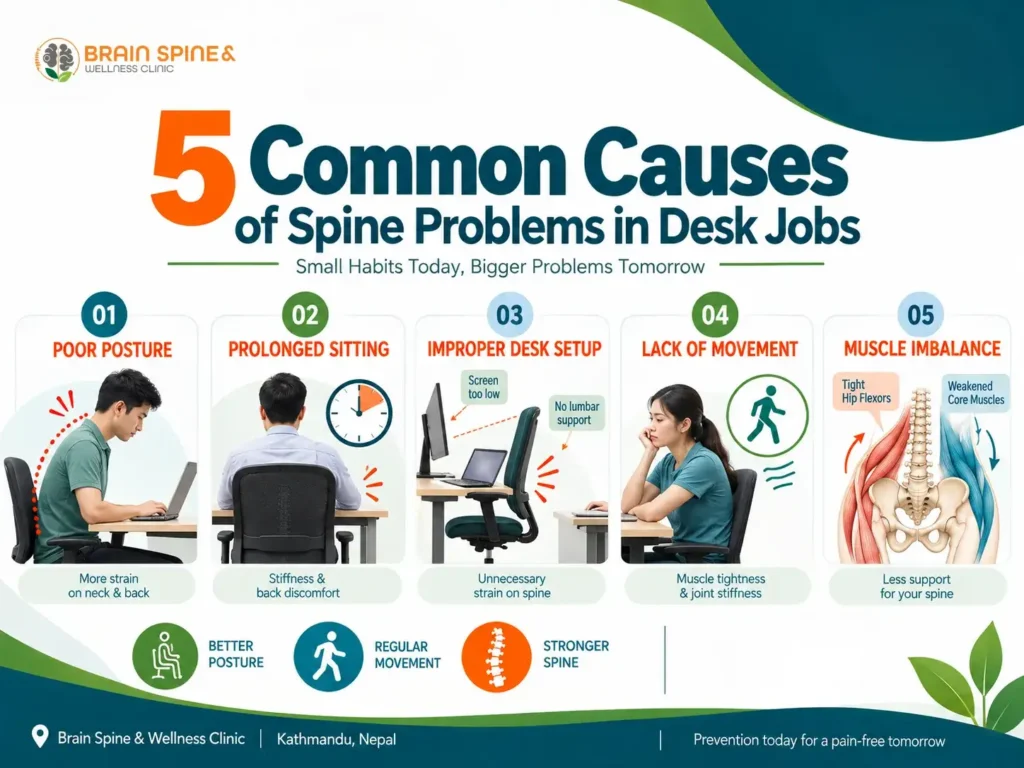
1. Poor Posture
Slouching, leaning forward toward the screen, or hunching the shoulders places extra pressure on the spine. Over time, this habit weakens muscles and causes spinal misalignment. Forward head posture — common when looking down at laptops or phones — strains the cervical spine and the muscles of the neck and shoulders.
2. Prolonged Sitting
Sitting for hours reduces blood circulation, especially in the lower back and legs, leading to stiffness and pain. Research shows that the discs in your spine experience more pressure when sitting than when standing or moving, particularly when leaning forward. This increased pressure can contribute to disc degeneration and herniation over time.
3. Improper Desk Setup
A chair that doesn’t support the lower back or a computer screen placed too high or low forces the spine into awkward positions. Poor monitor height, improper keyboard placement, and lack of lumbar support all compound musculoskeletal strain.
4. Lack of Movement
Remaining in one position for long periods causes muscle tightness, joint stiffness, and spinal stress. Office workers accumulate over 12 hours per week in single sedentary stretches lasting more than an hour. These long, unbroken blocks of sitting are where most postural damage occurs.
5. Muscle Imbalance
Prolonged sitting weakens and lengthens the muscles in your back while tightening and shortening the muscles in the front of your body — particularly the hip flexors. This imbalance alters the natural curve of the spine and leads to persistent pain.
Tips to Maintain a Healthy Spine
Protecting your spine does not require expensive equipment or dramatic lifestyle changes. Evidence shows that simple, consistent habits make a measurable difference.
Improve Your Posture
Keep your feet flat on the floor, shoulders relaxed, and ears aligned over your shoulders. Your screen should be at eye level so you are not looking down. Rather than chasing a single “perfect posture,” focus on movement variety — changing positions regularly is more protective than holding one rigid position.
Invest in Ergonomic Furniture
An ergonomic chair with adjustable lumbar support, armrests, and seat height helps maintain the natural curve of your lower back. A laptop riser with an external keyboard and mouse prevents the forward neck posture that laptops encourage. If possible, consider a sit-stand desk. Research shows that people using sit-stand desks report a 54% reduction in upper back and neck pain during active intervention periods.
Take Regular Breaks
Break up long sitting blocks. One effective framework is the 20-8-2 rule: every 30 minutes, spend 20 minutes sitting in good posture, 8 minutes standing or stretching, and 2 minutes walking or moving.
In a six-month randomized trial, office workers who took active breaks saw new neck pain drop from 44% to 17%, and new low back pain fall from 33% to 7–9%. The intervention was simply standing up regularly — no special equipment required.
Do Desk-Friendly Exercises
Micro-stretches at your desk relieve tension and keep your spine supple:
- Neck rolls: Slowly roll your head from side to side.
- Shoulder shrugs: Raise your shoulders to your ears, then release.
- Seated spinal twist: Gently twist to one side while holding the back of your chair.
- Wrist and forearm stretches: Helpful for those typing frequently.
Strengthen Your Core Muscles
A strong core supports your spine like a natural brace. Incorporate exercises such as planks, bridges, bird-dogs, and Superman stretches. Even 10–15 minutes a day of targeted movement helps you sit and stand straighter, longer.
Maintain a Healthy Weight
Excess body weight places additional stress on the spine, particularly the lumbar region. High BMI is a known predictor of chronic neck and back pain among office workers. Maintaining a healthy weight through balanced nutrition and regular activity reduces this load.
Stay Hydrated
Spinal discs are composed largely of water. Proper hydration helps maintain disc height and elasticity, supporting shock absorption. Aim for adequate water intake throughout the day — keeping a water bottle at your desk also encourages you to stand up and refill it regularly.
Use Proper Sitting Habits
Sit back in your chair so your lower back is supported. Keep your knees at approximately hip height, with thighs parallel to the floor. Avoid crossing your legs for long periods, as this can twist the pelvis and strain the lower back. Your elbows should rest at roughly 90 degrees when typing.
Lifestyle Habits for Long-Term Spine Health
What you do outside working hours matters just as much as your desk setup.
Sleep Right
Your spine recovers during sleep. Use a mattress and pillow that support the natural curve of your spine. Side sleepers should place a pillow between their knees to keep the hips aligned. Back sleepers may benefit from a small pillow under the knees to reduce lumbar strain. Avoid sleeping on your stomach, which forces the neck into an unnatural position.
Manage Stress
Chronic stress causes muscle tension, particularly in the neck, shoulders, and lower back. High psychological job demands are a known predictor of chronic neck pain. Practice stress-reduction techniques such as deep breathing, meditation, or short walks during breaks. Mental well-being and physical spine health are closely linked.
Stay Physically Active
Regular exercise strengthens the muscles that support your skeletal structure. A large study following over 11,000 adults found that those who walked more minutes per day had significantly less risk of developing chronic lower back pain. 90–120+ minutes of total walking daily was associated with especially strong protective effects.
The total volume of walking matters more than speed — even shorter bouts accumulated throughout the day count.
When to Seek Medical Help
Most desk-related back and neck pain improves with posture changes, movement, and time. However, certain symptoms should not be ignored. Dr. Sapkota recommends consulting a spine specialist if you experience:
- Persistent or worsening back pain that does not improve with rest and home care within three to four weeks
- Numbness or tingling in arms or legs, which may indicate nerve compression
- Difficulty standing or walking, suggesting possible spinal instability or severe nerve involvement
- Sudden weakness in muscles, which may signal a more serious neurological issue
- Loss of sensation, bowel or bladder incontinence, or severe, intolerable pain — these require urgent evaluation
At Brain Spine & Wellness Clinic, Dr. Sapkota and the team provide comprehensive evaluation using modern diagnostic tools, including digital X-ray, ultrasonography, and physiotherapy. Whether your condition requires conservative management or advanced endoscopic spine surgery, the clinic focuses on accurate diagnosis, clear communication, and personalized treatment plans.
Conclusion
A desk-job lifestyle does not have to mean a lifetime of back pain. The research is clear: the most effective spine protection comes from simple, consistent habits — breaking up long sitting blocks, improving your workstation ergonomics, strengthening your core, and staying active.
At Brain Spine & Wellness Clinic in Kathmandu, Dr. Suresh Sapkota brings years of specialized training in neurosurgery and endoscopic spine surgery to help patients at every stage — from prevention to advanced treatment. His approach emphasizes patient education, conservative care when possible, and surgical solutions only when truly necessary.
Your spine supports you every day. It is worth taking care of.
Book an Appointment
If you are experiencing persistent back or neck pain, do not wait for it to become chronic. Early evaluation leads to better outcomes.
Brain Spine & Wellness Clinic
📍 Kathmandu, Nepal
📞 +977 9709087879
Why Choose Dr. Suresh Sapkota for Endoscopic Spine Surgery?

Dr. Suresh Sapkota studied medicine (MBBS) at Kathmandu Medical College and trained further (MS in Neurosurgery) at King Edward Medical University. He is registered with the Nepal Medical Council under NMC 8223. His main focus is brain and spine surgery using this small-camera technique, and he has taught with the Endoscopic Spine Society of India since 2023.
With over 10 years of experience, he works at both Kathmandu National Medical College and Blue Cross Hospital. What patients tell us most, though, isn’t about his qualifications on paper. It’s how he talks to them. He tries non-surgery treatment first and only suggests surgery when it’s truly needed. He also personally explains your MRI results to you, in plain language, so you actually understand what’s going on in your own spine.
If you’re trying to decide what’s right for you and want a clear, honest opinion, you can book a visit at Brain Spine & Wellness Clinic, located in Dhapasi-07, Tokha.
FAQs
To improve your desk posture, keep your feet flat on the floor, your knees at a 90-degree angle level with your hips, your back pressed firmly against your chair with lumbar support, and the top of your computer monitor at eye level
Yes, you can significantly improve and correct years of bad posture through consistent stretching, targeted muscle strengthening, and better ergonomic habits
Stand up or move at least every 30 to 60 minutes. Brief interruptions reduce pressure on your spinal discs and ease muscle tension. Try the 20-8-2 rule: 20 minutes sitting with good posture, 8 minutes standing, and 2 minutes moving.
No — a standing desk alone will not cure back pain. The benefit comes from changing positions regularly, not from standing all day. Alternate between sitting and standing, move frequently, and pair your setup with core exercises.Accordion Content
See a specialist if pain lasts more than three to four weeks, worsens, or comes with numbness, tingling, or weakness in your limbs. Seek urgent care for difficulty walking, loss of sensation, or bladder and bowel changes. At Brain Spine & Wellness Clinic in Kathmandu, Dr. Suresh Sapkota can assess whether you need conservative treatment, physiotherapy, or further investigation.