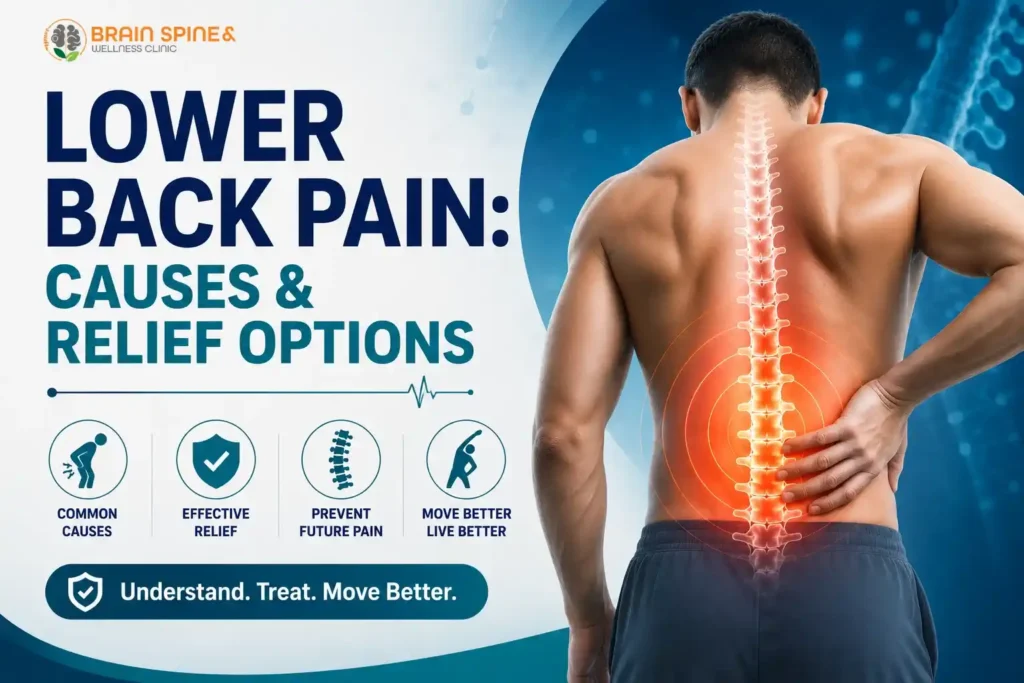
Lower Back Pain: Causes and Relief Options.
Lower back pain is discomfort felt in the lumbar spine, most often caused by muscle or ligament strain, disc problems, or nerve compression. Most cases improve within a few weeks with rest, movement, and over-the-counter pain relief, but persistent, worsening, or radiating pain needs evaluation by a doctor.
What Is Lower Back Pain?
Lower back pain (lumbar pain) is pain felt in the lumbar region, the lower spine, located below the ribcage and above the pelvis. This part of the spine carries most of the body’s weight and handles bending, twisting, and lifting, which is why it’s the most common site of back injury
Doctors classify low back pain by duration
- Acute– lasts a few days to a few weeks, usually from a specific movement or injury
- Subacute – lasts six weeks to three months
- Chronic – persists longer than three months and often needs ongoing pain management
Symptoms of Lower Back Pain
- Dull, aching pain that builds gradually
- Sharp back pain that starts suddenly, often after lifting or twisting
- Back stiffness, especially in the morning or after sitting
- Muscle spasms in the lower back
- Pain radiating into the buttocks or down one leg (sciatica)
- Tingling, numbness, or leg pain along a nerve path
- Reduced mobility or limited range of motion when bending or standing
Leg weakness, numbness, or loss of bladder control alongside back pain are red-flag symptoms.
Causes of Low Back Pain
- Muscle or ligament strain – from sudden movement, poor lifting technique, or overexertion
- Herniated or bulging disc – a disc pushes out of place and presses on a nearby nerve, causing pain, tingling, or numbness
- Degenerative disc disease – wear and tear reduces disc cushioning over time
- Spinal stenosis – narrowing of the spinal canal that presses nerves, common with age
- Osteoarthritis – cartilage breakdown in spinal joints, causing inflammation and stiffness
- Spondylolisthesis – one vertebra slips forward over another, affecting alignment
- Osteoporosis – weakened bones raise the risk of small spinal fractures
- Nerve compression – a pinched or irritated nerve in the lumbar spine
- Other causes – kidney stones, pregnancy-related posture and ligament changes, or infection
Risk Factors
- Aging – discs and joints wear down over time
- Obesity – added weight stresses the lumbar spine
- Poor posture – strains spinal structures during sitting or standing
- Sedentary lifestyle – weakens the core muscles that support the spine
- Heavy lifting – frequent lifting raises injury risk
- Smoking – reduces blood flow to spinal discs, speeding degeneration
- Weak core muscles – shift more load onto the lower back
- Pregnancy – hormonal and weight-distribution changes strain the lumbar spine
- Athletes – repetitive stress or high-impact activity increases injury risk
Diagnosis and Tests for Low Back Pain
Diagnosis starts with a physical exam and a review of symptoms, medical history, and lifestyle, plus a neurological exam to check reflexes, strength, and sensation. Depending on findings, further tests may include:
- Spine X-ray – shows bone structure and alignment
- MRI scan – detailed imaging of discs, soft tissue, and nerves; used to detect herniated discs or spinal stenosis
- CT scan – detailed cross-sectional imaging of the spine
- EMG test (electromyography) – measures muscle electrical activity to detect nerve compression
- Blood tests – rule out infection or inflammatory conditions
Treatments for Lower Back Pain?
Most lower back pain responds to non-surgical treatment:
- Physical therapy – targeted exercises for strength, flexibility, and posture
- NSAIDs – reduce pain and inflammation
- Muscle relaxants – short-term relief for muscle spasms
- Chiropractic care – spinal adjustments to improve alignment and mobility
- Massage therapy – relaxes tight muscles and improves circulation
- Epidural steroid injections – anti-inflammatory medication delivered directly to the affected area for nerve-related pain
- Exercise therapy and rehabilitation – structured programs to rebuild strength and prevent recurrence
- Spine surgery – used for significant nerve compression, spinal instability, or when conservative treatment fails; minimally invasive options like endoscopic spine surgery can shorten recovery time
Treatment choice depends on the cause, severity, and duration of symptoms.
How To Prevent It?
- Core strengthening – supports and stabilizes the lumbar spine
- Proper lifting technique – bend at the knees, not the waist, and keep loads close to the body
- Stretching – improves flexibility and reduces muscle tension
- Posture correction – maintain neutral spine alignment when sitting, standing, and sleeping
- Ergonomics – set up your workstation to reduce strain
- Regular exercise – maintains spine mobility and strength
- Healthy weight – reduces stress on the lower back
When Should I Worry About My Lower Back Pain?
Seek prompt medical care if back pain comes with:
- Leg weakness or difficulty walking
- Loss of bladder or bowel control
- Numbness in the groin or inner thighs (saddle anesthesia)
- Fever
- Severe abdominal pain
- Pain that worsens at night or doesn’t improve with rest
- Pain following a significant fall, accident, or trauma
These signs can point to serious nerve compression or spinal infection and need urgent evaluation by a neurosurgeon or spine specialist.
Meet Dr. Suresh Sapkota: Senior Consultant Neurosurgeon, Endoscopic Brain and Spine Surgeon.
If your lower back pain isn’t responding to conservative care, or your MRI shows a herniated disc, spinal stenosis, or nerve compression, the specialist you consult matters. Dr. Suresh Sapkota is widely regarded as one of the top brain and spine surgeons in Kathmandu, with over a decade of experience in advanced neurosurgical and endoscopic spine procedures.
Credentials and background:
- MBBS – Kathmandu Medical College, Kathmandu University (2008)
- MS in Neurosurgery – King Edward Medical University, Lahore, Pakistan (2017)
- Senior Consultant Neurosurgeon with over 10 years of clinical experience in brain and spine surgery
- Specializes in endoscopic spine surgery, a minimally invasive technique used to treat herniated discs, spinal stenosis, and nerve compression with smaller incisions and faster recovery than traditional open surgery
- Treats a full range of neurosurgical conditions, including brain and spinal tumors, degenerative spine disease, spondylolisthesis, and complex neurological disorders
- Practices at Brain Spine and Wellness Clinic in Kathmandu, where he leads patient care combining surgical expertise with structured rehabilitation and pain management
Why patients with lower back pain consult Dr. Sapkota:
Many cases of low back pain resolve with physical therapy, medication, and lifestyle changes. But when pain is caused by a structural problem, a herniated disc pressing on a nerve, advancing spinal stenosis, or vertebral instability, an accurate diagnosis and a surgeon experienced in both conservative and surgical options make a measurable difference in outcomes. Dr. Sapkota’s focus on endoscopic techniques means that even patients who need surgical intervention often qualify for minimally invasive options with shorter hospital stays and quicker return to daily activity.
If your back pain includes any of the red-flag symptoms listed above, or hasn’t improved after several weeks of conservative treatment, a consultation with a neurosurgeon like Dr. Sapkota can help determine the right next step.
Frequently Asked Questions
Gentle movement, heat or ice, and short rest periods. Avoid prolonged bed rest, as it slows recovery.
Usually, most cases are muscle strain and resolve on their own. Persistent pain, leg weakness, or numbness warrants evaluation to rule out a herniated disc or spinal stenosis.
Acute pain typically improves within a few days to six weeks. Pain lasting beyond three months is classified as chronic and needs further evaluation.
Yes. Poor posture and prolonged sitting place uneven stress on the spine, muscles, and ligaments.
If pain is severe, lasts more than a few weeks, radiates down the leg, or comes with numbness, weakness, or bladder/bowel changes.
Not entirely, but a healthy weight, a strong core, proper lifting technique, and regular activity significantly lower the risk.
“This content is for informational purposes only and is not a substitute for professional medical advice, diagnosis, or treatment.”